
Why the venue you choose is a strategic advantage, not just a backdrop.
Physical venues don't gather their crowds by accident. For brands, choosing where to host an event is no longer just aesthetics or logistics: it's a chance to access a community.
 Marguerite Japy, Co-founder & CEO · July 24, 2026


Physical venues don't gather their crowds by accident. Over time, a place becomes a meeting point for people who share habits, tastes, and sometimes values. That's not a coincidence: it's the result of years of who showed up, who came back, and who told their friends. For a brand, choosing a venue isn't just about aesthetics, logistics, or budget. It's a chance to access a community that already exists, one you didn't have to build from nothing. An event actually works when the venue stops being a backdrop and becomes a channel: the most direct route to the community a brand is trying to reach. The question stops being "where should we host this event?" It becomes: "who do we want to reach, and where does that community already gather?"
There are two ways to use this lever.
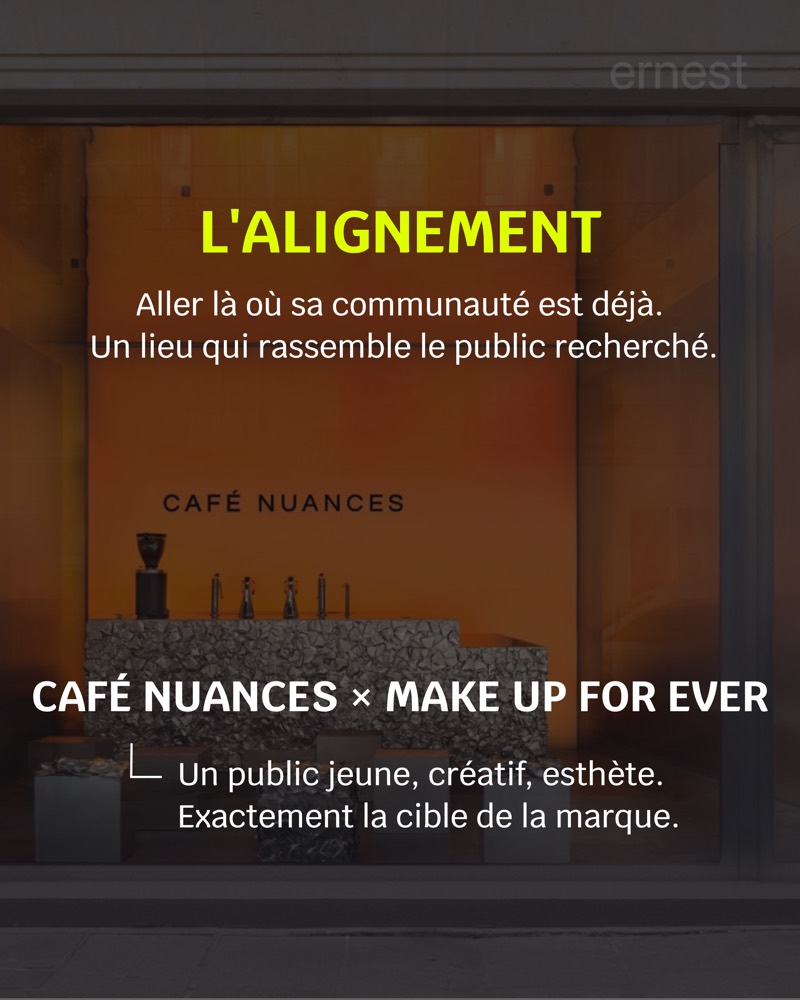
The first is alignment: reinforcing a brand's affinity with a community that already exists. Take Cafe Nuances and Make Up For Ever. Cafe Nuances draws a crowd that's young, creative, and aesthetically minded, exactly the audience Make Up For Ever wanted to reach. The brand didn't have to build that room. It just had to show up in it.
The second is contrast: creating curiosity with an audience that wouldn't expect to see you there. Take Adela and La Vie. La Vie is a plant-based brand setting up inside a temple of Italian cured meats. The gap between the two becomes the message itself, hard to ignore precisely because it doesn't fit. As IRL becomes central to brand strategy, venues stop being simple backdrops. They become tools for identifying, understanding, and reaching communities. Tomorrow, the question won't be where. It will be for whom.